
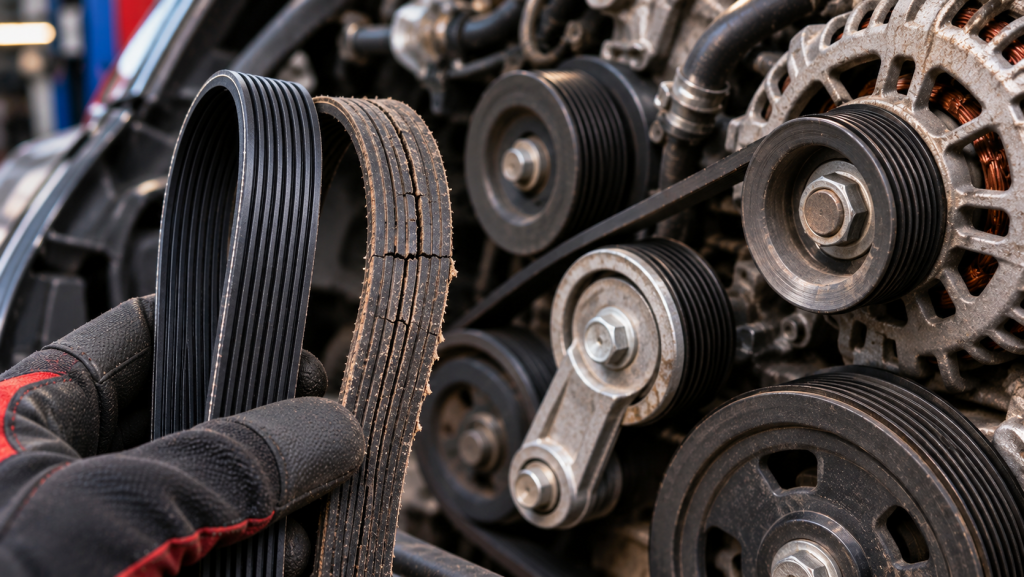
It is one of the most overlooked parts under your hood, and it can leave you stranded with almost no warning. The serpentine belt is a long, ribbed rubber belt that snakes around several pulleys at the front of the engine, and it powers a surprising list of systems. When it is healthy, you never think about it. When it frays, slips or snaps, the effects can show up all at once: a battery light, a steering wheel that suddenly feels heavy, an engine that begins to overheat or an AC that stops working. The good news is that belts usually give hints before they fail. This guide covers the warning signs of a worn serpentine belt, what causes belts to wear out, what happens when one fails and how to avoid a breakdown. If you are looking for serpentine belt replacement in Greensboro, here is how to spot the problem early.
What Does the Serpentine Belt Do?
The serpentine belt, sometimes called the drive belt or accessory belt, takes power from the engine’s crankshaft and uses it to turn several accessories. Depending on the vehicle, these can include:
- The alternator, which charges the battery and powers the electrical system.
- The power steering pump, on vehicles that still use a belt driven pump.
- The air conditioning compressor.
- The water pump, on many vehicles, which circulates coolant to keep the engine from overheating.
A belt tensioner, which may be spring loaded or hydraulic, keeps the belt tight, and idler pulleys guide it along its path. When the belt fails, every accessory it drives can stop at once. Some vehicles use more than one belt or a different arrangement, so your owner’s manual is the best source for how your system is set up.
Warning Signs of a Worn Serpentine Belt
Squealing or chirping noises
A high pitched squeal, especially at startup, during acceleration or when you turn the steering wheel all the way, is the classic sign of a belt problem. It usually means the belt is slipping because it is worn, glazed, loose or contaminated. Damp weather can make a worn belt squeal more, and the noise may come and go at first. A belt that squeals regularly is asking for attention. Noises can also come from a failing pulley, tensioner or bearing, so a proper inspection can tell the difference.
Visible cracks
With the engine off and cool, look at the ribbed side of the belt. Small cracks across the ribs can appear as the rubber ages. A few light cracks may be a sign of normal aging, but many cracks, deep cracks or chunks missing mean the belt is nearing the end of its life.
Fraying or uneven edges
Loose threads, ragged edges or splitting along the sides of the belt can point to a misaligned pulley, a damaged component or a belt that is rubbing where it should not. Frayed belts can fail suddenly.
A shiny or glazed surface
A belt that looks smooth and glossy instead of matte may be glazed from heat and slipping. Glazed belts do not grip as well, which can cause squealing and reduced accessory performance.
Missing ribs or chunks
If pieces of the ribs have broken off, the belt is badly worn and should be replaced right away.
Fluid contamination
Oil, coolant or other fluids on the belt can soften the rubber and cause slipping. If you see a belt that looks wet, greasy or stained, there may be a leak that needs to be repaired along with the belt.
A battery or charging warning light
If the belt is slipping or has broken, the alternator may stop charging the battery. A battery light on the dashboard, dim headlights or electrical glitches can point to this. Check your owner’s manual for what your dashboard lights mean.
Heavy steering
On a vehicle with a belt driven power steering pump, a failing belt can make the steering suddenly feel heavy and hard to turn. You can still steer the car, but it takes much more effort, so grip the wheel firmly and pull over safely.
Overheating
If the belt drives the water pump and it slips or breaks, the engine can overheat quickly. A temperature gauge that climbs, steam from under the hood or a coolant smell calls for stopping right away, as long as it is safe to do so. Do not open the radiator or coolant cap while the engine is hot.
Weak or no air conditioning
If the AC compressor loses power from a slipping or broken belt, the air from the vents may turn warm. Poor AC alone has many possible causes, but combined with other signs, it can point to the belt.
Rough or noisy operation from other accessories
A worn tensioner or pulley can cause rattling, grinding, ticking or wobbling sounds near the front of the engine, and may cause the belt to flutter or jump. These sounds can lead to belt damage if ignored.
What Causes a Serpentine Belt to Wear Out?
- Age and heat. Rubber hardens and cracks with time and temperature cycles.
- Mileage. Belts wear as they run over pulleys thousands of times.
- Misaligned or worn pulleys. A bad pulley can chew up a new belt.
- A failing tensioner. Too little tension causes slipping, and too much can wear the belt and bearings.
- Fluid leaks. Oil or coolant can degrade the rubber.
- Debris or damage. Rocks, road debris or improper installation can cut or nick the belt.
- Humidity and weather. Moisture and swings in temperature can speed up wear.
What Happens When the Belt Breaks?
A snapped serpentine belt is more than an annoyance. Several things can happen at the same time:
- The battery stops charging, and the car will eventually run out of electrical power.
- The power steering may stop assisting, making the wheel heavy.
- The AC stops working.
- On many vehicles, the water pump stops, and the engine can overheat quickly, which can cause serious damage.
If you lose the belt while driving, pull over as soon as it is safe and turn off the engine. Do not keep driving, especially if the temperature gauge is rising. A belt failure can lead to serious engine damage if the engine overheats. If you suspect an issue but are not sure what is going on, the cause could also be a dead battery or starter, which our guide on bad starter or dead battery can help you sort through.
How to Check Your Belt Safely
A quick visual check takes only a minute. Follow these safety rules:
- Turn the engine off and let it cool. Never touch a belt or pulleys while the engine is running. Belts and pulleys can pull in hands, hair and clothing.
- Take the key out or switch the vehicle fully off. Some vehicles have electric fans that can start on their own.
- Use a flashlight to look along the belt path. Check the ribbed side for cracks, fraying, glazing, missing chunks and contamination.
- Check the belt tension by feel only if your owner’s manual shows how. Do not pry or force anything.
- Look at the pulleys and tensioner for wobble, rust or leaking fluid.
- Do not force anything. If something looks off, let a technician take a look.
How Often Should a Serpentine Belt Be Replaced?
There is no single number. Replacement intervals vary by vehicle and by belt material, and the owner’s manual lists the recommended schedule or inspection interval for your car. Modern belts are made from materials that last a long time, but they still wear, and age and conditions matter as much as mileage. A good approach is to follow your owner’s manual, have the belt inspected during regular service and replace it sooner if you see warning signs. Our seasonal car maintenance checklist for Greensboro drivers is a handy way to keep belts, hoses and other wear items on your radar throughout the year.
What Belt Replacement Involves
Replacing a serpentine belt may sound simple, but it requires care:
- Finding the right belt. Length, width and rib pattern must match your engine and accessories.
- Routing it correctly. The belt follows a specific path around the pulleys. A routing diagram is often found under the hood or in a repair manual.
- Releasing and resetting the tensioner. This requires the right tool and technique.
- Inspecting related parts. A good technician checks the tensioner, idler pulleys, water pump and other parts for wear, since a worn pulley or tensioner can ruin a new belt.
- Checking for leaks. Oil or coolant leaks that contaminated the old belt should be addressed.
- Testing the result. After installation, the technician confirms that the belt is tracking correctly and that the accessories work.
Because the job involves tight spaces and a tensioner under load, many drivers prefer to have a professional handle it.
How to Avoid Being Stranded
- Listen for squeals and chirps, and do not ignore them.
- Inspect the belt regularly, especially before long trips and seasonal extremes.
- Follow your owner’s manual schedule for inspection and replacement.
- Fix leaks promptly, since fluid damages belts.
- Pay attention to warning lights and the temperature gauge.
- Replace related parts as needed, such as a worn tensioner or pulley.
- Know what to do if it breaks: pull over safely, turn off the engine and call for help.
How a Mobile Mechanic Can Help
If you hear a squeal or see cracks, you do not have to wait until the belt fails on the highway. A mobile mechanic can come to your home or workplace, inspect the belt, tensioner and pulleys and replace the belt on site in many cases. If your car has already broken down, a technician can come to you and often get it going again without a tow. Some vehicles have belts that are hard to reach, and a good technician will tell you if a job needs a shop.
Quick Warning Sign Checklist
- Squealing or chirping, especially at startup or when turning.
- Cracks, fraying, glazing or missing ribs.
- A battery or charging warning light.
- Heavy steering or weak AC.
- A rising temperature gauge.
- Oil or coolant on the belt.
- Rattling, grinding or wobbling near the front of the engine.
A belt is a simple part to inspect and a risky one to ignore. If you have noticed any of the signs above, or you would like a technician to check yours, visit our homepage to learn more, or contact us to schedule a visit.